March 23, 2026
Code-Switching 101: Understanding Your Child’s Dual-Language
Is your child mixing English and Mandarin? Discover why code-switching is a healthy sign of bilingual development and how you can support their journey.
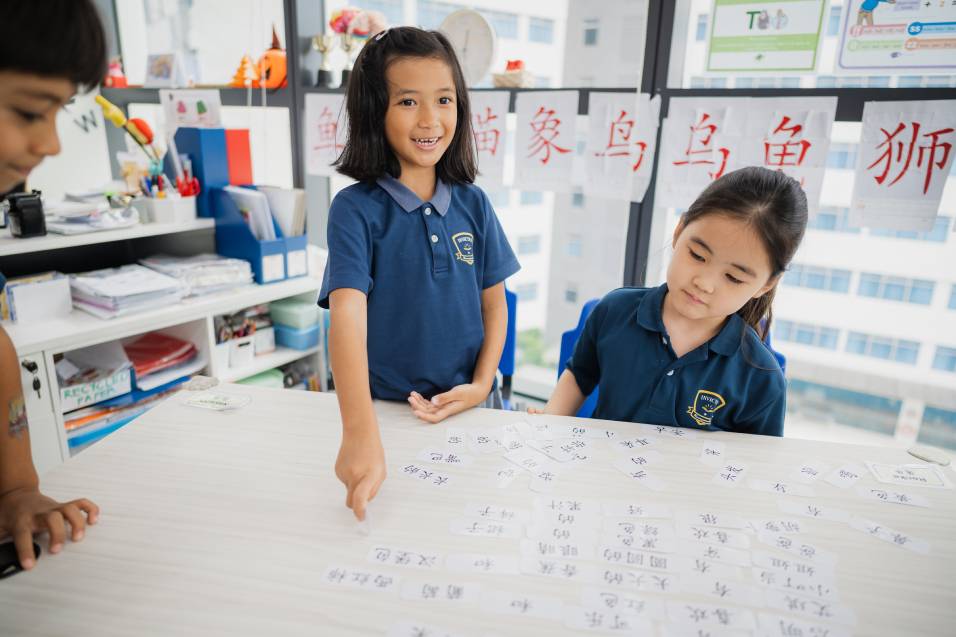
Is your child mixing English and Mandarin? Discover why code-switching is a healthy sign of bilingual development and how you can support their journey.
It is a familiar scene at the dinner table. Your child starts a sentence in English, then switches to Mandarin halfway through. You pause. Should you correct them? Is this confusion? Or is something else happening?
If your child mixes languages at home, take a deep breath. What you are hearing is called code-switching, and it is a natural and healthy part of growing up bilingual.
In Singapore, where bilingualism is part of daily life, many children grow up enrolled in a bilingual programme that supports both English and Mandarin.
Let’s take a closer look at what code-switching really means and why it is something to celebrate.
What Is Code-Switching?
Code-switching happens when a speaker alternates between two or more languages within a conversation or even within a single sentence. For bilingual children, this often happens effortlessly and unconsciously.
To adults, this may sound like mixing. To a bilingual brain, it is efficient communication. Your child is simply choosing the word that comes most naturally in the moment.
Why Do Children Code-Switch?
There are several healthy reasons why children switch between English and Mandarin:
1. Vocabulary Development Is Uneven
Bilingual children do not always learn words at the same pace in both languages. They may know a specific concept in Mandarin but not yet in English, or vice versa. Switching allows them to express themselves fully without frustration.
2. Context Matters
Children associate languages with people and settings. English may feel natural for school subjects taught through an international secondary curriculum, while Mandarin may be used more often with grandparents. When these worlds overlap, so do the languages.
This is especially true once children enter an international secondary curriculum, where English is often the main language used for academic subjects.
3. Cognitive Flexibility
Research consistently shows that bilingual children develop strong executive functioning skills. The ability to shift between languages reflects mental agility, not confusion.
Is Code-Switching a Problem?
In most cases, no.
Mixing languages does not mean your child is behind or struggling. In fact, studies suggest that bilingual children are very capable of separating languages when needed. They understand more than they can always express cleanly in one language at a time.
As children grow and gain stronger proficiency in both English and Mandarin, code-switching often becomes more intentional and context-aware. They learn when it is appropriate, such as at home with family, and when to stay within one language, such as during a formal presentation.
How Parents Can Respond
If you are supporting your bilingual child, here are practical ways to encourage healthy language development:
Model Without Correcting Harshly
If your child says, “I want 那个 blue colour one,” you can respond gently with, “You would like the blue one?” This reinforces vocabulary without creating pressure.
Create Clear Language Spaces
Some families choose to speak predominantly Mandarin at home and allow English to develop at school, or vice versa. Consistency helps, but flexibility is also important.
Encourage Rich Conversations
Read books, tell stories, and ask open-ended questions in both languages. Depth of conversation matters more than perfection.
Celebrate Both Languages
Language carries culture, identity, and belonging. Affirming both English and Mandarin strengthens your child’s confidence.
The Bigger Picture
Singapore’s educational landscape recognises the value of bilingualism. In thoughtfully designed programmes, children do not just memorise vocabulary lists. They engage with language through inquiry, collaboration, and real-world contexts.
At Invictus, our bilingual programme is offered at the Centrium Square campus, where language learning is thoughtfully integrated into everyday classroom experiences. Students use English and Mandarin in meaningful ways across subjects, building fluency alongside academic confidence. As they progress through an international secondary curriculum, they are equipped to thrive in both local and global contexts.
Code-switching, in this light, is not a flaw. It is evidence of a child navigating two linguistic worlds with growing mastery.
When Should You Be Concerned?
While code-switching itself is normal, you may wish to consult an educator if your child shows difficulty understanding instructions in either language, or struggles significantly with communication overall. In most cases, however, mixing languages alone is not a red flag.
Conclusion:Embracing Your Child’s Bilingual Journey
The next time you hear English and Mandarin woven together in one lively sentence, consider it a milestone, not a mistake. Your child is building bridges between cultures, communities, and ways of thinking.
Curious about how a nurturing bilingual environment can support your child’s growth? Discover how Invictus International School fosters confident communicators through its integrated bilingual approach at the Centrium Square campus. Book a school tour and see how we empower students to flourish in both languages and beyond.
An Institution by Sing-Ed Corporation.
© 2026 Invictus International School. All Rights Reserved.