May 19, 2026
Bilingual vs. Language-as-Subject: What’s the Difference?
Bilingual approach or language-as-subject? Understand the key differences and how each approach impacts your child’s learning and real-world confidence.
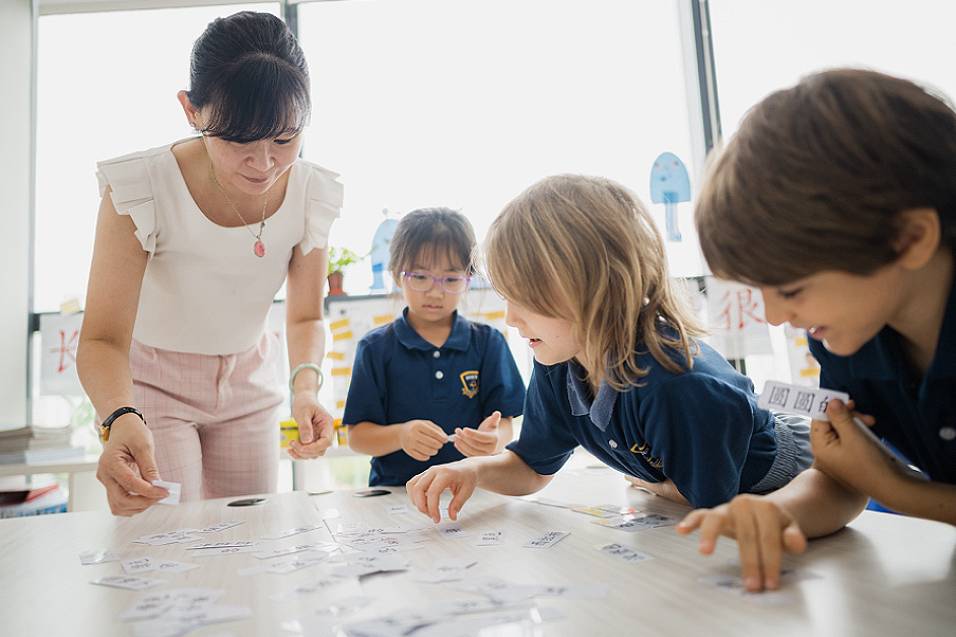
Bilingual approach or language-as-subject? Understand the key differences and how each approach impacts your child’s learning and real-world confidence.
Your child might be able to score well in a language test, but would they feel confident using that language in a real conversation? That gap between knowing and actually using a language is something many parents start to notice over time.
The difference often comes down to how the language is taught. Some schools focus on lessons, worksheets, and exams. Others build language into everyday learning so it becomes part of how children think and communicate. Understanding this distinction can help you better picture what your child’s experience will look like in the classroom and beyond.
What Does “Language-as-Subject” Mean?
Language-as-subject is the more familiar approach. It is how most of us learned a second language in school.
Here, the language is taught during a dedicated lesson, much like Maths or Science. Students learn vocabulary, grammar rules, reading, and writing, usually within a structured classroom setting.
A typical experience might include:
- Memorising vocabulary lists
- Completing grammar exercises
- Reading short passages
- Writing essays or compositions
This approach is clear and structured. It works well for building a strong foundation in grammar and literacy. Many students become competent readers and writers through this method.
However, it often stays within the classroom. Once the lesson ends, students switch back to their primary language for the rest of the day. This can make it harder for them to develop natural fluency or confidence in real-life conversations.
What Is a Bilingual Approach?
A bilingual approach goes beyond treating language as a single subject. Instead, it integrates two languages into everyday learning.
In many bilingual schools, students use both languages throughout their school day. Language becomes a tool for learning, not just something to study.
This means your child might:
- Learn Science in English
- Explore Art or Music in another language
- Participate in discussions, group work, and presentations in both languages
The goal is immersion. Rather than switching languages on and off, students live and think in both.
This approach aligns closely with the demands of global education, where communication across cultures is increasingly valuable.
The Key Differences at a Glance
To make things clearer, here is a simple comparison:
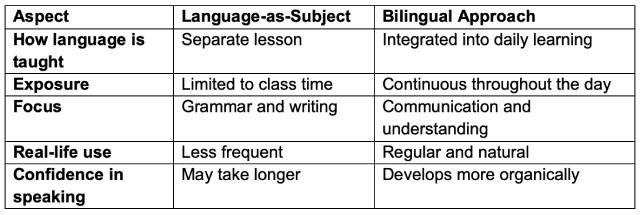
Both approaches have their strengths. The right choice depends on your child’s needs and learning style.
How It Feels for Your Child
One of the biggest differences is how your child experiences language day to day.
With language-as-subject, learning can feel more academic. Some children enjoy the structure. Others may find it harder to stay engaged, especially if they do not use the language outside of class.
With a bilingual approach, learning often feels more natural. Your child is not just studying the language. They are using it to solve problems, express ideas, and interact with others.
This can lead to:
- Greater confidence when speaking
- Stronger listening skills
- A more intuitive understanding of the language
It is less about memorising and more about experiencing.
Does One Lead to Better Outcomes?
There is no one-size-fits-all answer. Both approaches can be effective when done well.
Language-as-subject can produce strong academic results, especially in reading and writing. It suits students who thrive with structure and clear learning goals.
A bilingual approach, on the other hand, often supports:
- Better conversational fluency
- Improved adaptability between languages
- Stronger cultural awareness
Some parents also notice that children in bilingual environments become more comfortable switching between languages in real-life situations.
A Closer Look at Bilingual Learning at Invictus
At Invictus International School, the bilingual experience is designed to feel seamless rather than forced.
This approach is offered specifically at the Centrium Square campus. Here, language is not treated as a standalone subject alone. Instead, it is woven into everyday classroom experiences.
Students are immersed in both English and Mandarin through their daily subjects.
For example:
- English is used for subjects such as English, Mathematics, Science, Global Perspectives, and Digital Literacy
- Mandarin is integrated into areas like Chinese, Music, Art, Physical Education, and the Integrated Chinese Programme
This structure allows students to engage with both languages in meaningful ways throughout the day.
Rather than switching mindsets between lessons, students naturally develop familiarity and confidence in both.
Which Approach Is Right for Your Child?
Every child is different. What works well for one may not suit another.
You might consider language-as-subject if your child:
- Prefers structured learning environments
- Enjoys clear rules and step-by-step progression
- Is already confident in their primary language
A bilingual approach may be a better fit if your child:
- Learns best through interaction and experience
- Is curious and open to trying new ways of thinking
- Would benefit from using language in real-life contexts
It is also worth thinking about your long-term goals. Are you hoping your child will simply pass exams, or truly feel comfortable communicating in another language?
Common Questions Parents Ask
- Will my child get confused learning two languages?
It is a common concern, but children are often more adaptable than we expect. With the right support, they can learn to navigate both languages confidently.
- Is one approach more demanding?
A bilingual approach can feel more immersive, but it does not necessarily mean more pressure. It is simply a different way of learning.
- Can children still excel academically in a bilingual environment?
Yes. When well-structured, bilingual programmes support both academic and language development.
Final Thoughts
Choosing between a bilingual approach and language-as-subject is not about which is better overall. It is about what feels right for your child.
Some children thrive with structured lessons and clear boundaries. Others flourish when language becomes part of their everyday experiences. The key is understanding how your child learns best and what kind of environment will help them grow in confidence.
Discover the Right Learning Environment for Your Child
Curious to see how a bilingual approach works in real life?
At Invictus International School, learning is designed to feel purposeful, engaging, and connected. At the Centrium Square campus, students experience a thoughtfully integrated bilingual environment where language is part of how they explore, create, and communicate every day.
If you are considering a school that nurtures both academic growth and real-world communication skills, it is worth seeing it for yourself.
Visit Invictus International School to learn more or book a campus tour and experience how language learning can come alive in the classroom.
An Institution by Sing-Ed Corporation.
© 2025 Invictus International School. All Rights Reserved.